Health and Safety Policy for a Removal Company in Finsbury Park
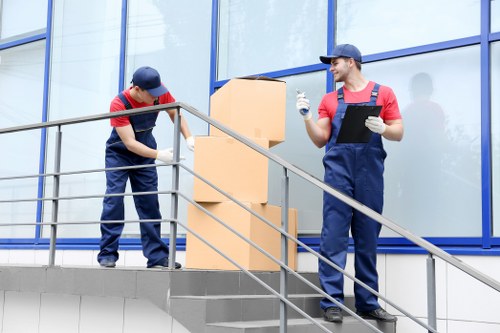 Our health and safety policy sets out how our removal company protects employees, customers, visitors, and the public during every stage of a move. We are committed to carrying out all relocation work in a safe, careful, and professional manner. This policy applies to all team members, contractors, and anyone involved in our operations, whether the job is a small flat move or a larger commercial relocation. We believe that safe working practices are essential to quality service, reduced disruption, and the prevention of avoidable incidents.
The purpose of this policy is to identify hazards, reduce risks, and create a culture where safety is always part of the job. Moving and handling furniture, appliances, boxes, and specialist equipment can involve strain, slips, trips, falling objects, and damage to property. For that reason, our removals company uses planned procedures, suitable equipment, and ongoing training to ensure work is completed safely. All employees are expected to follow this policy and to act responsibly at all times.
We comply with applicable health and safety requirements and apply good practice throughout our operations. This includes conducting risk assessments, maintaining equipment, and reviewing incidents so that lessons are learned. Our aim is to prevent injury and reduce risk through preparation rather than reaction. By embedding safety into daily tasks, our moving company can carry out work efficiently while protecting everyone involved.
Risk assessment is central to our approach. Before a move begins, we consider the property layout, access points, loading areas, stairways, lift availability, weather conditions, parking arrangements, and the type of items to be moved. Any significant risks are noted and controlled where possible. If a task cannot be completed safely, it will be paused until suitable measures are in place. This careful planning helps our removals service manage challenging conditions in a controlled way.
Manual handling is one of the main safety concerns in removals work. To reduce the risk of injury, staff are trained in lifting techniques, team handling, posture awareness, and the correct use of aids such as trolleys, straps, and ramps. Heavy, awkward, or fragile items are assessed individually. Where necessary, items are dismantled or moved by more than one person. We encourage employees to stop and ask for assistance whenever a load is unsafe to handle alone.
 Vehicles, lifting tools, and protective equipment are inspected regularly to ensure they remain safe and fit for use. Our drivers and crew members are responsible for checking that items are secured properly before transport. Removal company safety also depends on keeping work areas tidy, managing cables and packaging, and avoiding blocked access routes. These simple steps reduce the chance of slips, trips, collisions, and damage to goods or premises.
At the midpoint of each job, safety remains under constant review.  If conditions change, such as poor weather, restricted access, or unexpected obstructions, the team leader will reassess the situation and adjust the plan. We expect all workers to report hazards immediately, including damaged equipment, unsafe flooring, exposed wires, or signs of fatigue. Open communication supports a safer workplace and helps prevent minor issues from becoming serious accidents.
Training is a vital part of our policy. Every new team member receives induction training covering safe lifting, vehicle safety, fire awareness, incident reporting, personal protective equipment, and the importance of working within their competence. Refresher training is provided when needed, especially after changes in procedures or equipment. Our moving services rely on skilled staff who understand how to work safely while maintaining a high standard of care.
We also recognise the importance of protecting the public and the client’s property. During a move, entryways, hallways, and loading spaces must be kept as clear as possible. Furniture and boxes should be handled carefully to avoid marks, breakages, or blocked escape routes. When working in shared buildings, employees are expected to be respectful, quiet where appropriate, and mindful of neighbours and other occupants. Safe practice and professional conduct go hand in hand for our moving company.
Personal protective equipment is used where required. Depending on the task, this may include safety footwear, gloves, hi-vis clothing, or other suitable items. PPE does not replace safe working methods, but it provides an extra layer of protection when hazards cannot be fully removed. Workers are responsible for using equipment correctly and reporting any defects. Supervisors must ensure that protective items are available and appropriate for the task.
Accidents, near misses, and unsafe conditions are recorded and reviewed. This process helps us identify recurring risks and improve our procedures. Where necessary, corrective action will be taken promptly, and staff will be informed of any changes. We view every incident as an opportunity to strengthen our removal services and improve the safety of future jobs. Serious incidents may require further investigation and additional control measures.
 Fire safety, emergency planning, and first aid provision are also important parts of this policy. Team leaders must know how to respond if an emergency arises, including how to call for help and how to guide others to safety. First aid supplies should be accessible, and staff should know the basic steps to take if someone is injured. Emergency routes and exits must never be obstructed by boxes, furniture, or equipment.
We expect all employees to take personal responsibility for safe behaviour. This includes staying alert, avoiding rushed actions, reporting fatigue, using equipment correctly, and following instructions from supervisors. Unsafe shortcuts are not acceptable. A removal company can only perform well when every team member supports a safe and disciplined working environment. Good habits protect people, reduce damage, and improve the overall quality of service.
This policy will be reviewed regularly to ensure it remains effective, relevant, and aligned with current standards. Updates may be made after changes in operations, new risks, or reported incidents. Management is responsible for making sure the policy is understood and applied consistently across the business. Safety is not a one-time task but an ongoing commitment that shapes how we work every day.
 By maintaining clear procedures, providing training, and encouraging responsibility, our removals company aims to deliver safe and reliable services at all times. We believe that careful planning, teamwork, and respect for safety are essential to successful moving work. This policy reflects our commitment to protecting people, property, and the standards of professional service that customers expect.